






欧美精品在线第一页,久久av影院,午夜视频在线播放一三,久久91精品久久久久久秒播,成人一区三区,久久综合狠狠综合久久狠狠色综合,成人av一区二区亚洲精,欧美a级在线观看
         Home Page | Photos | Video | Forum | Most Popular | Special Reports | Biz China Weekly
        Make Us Your Home Page
        Most Searched: Spring Festival  AIIB  Zika   Neymar  Australia Open  

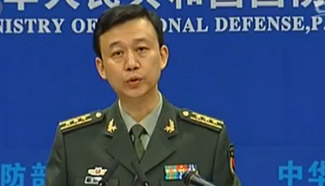
        Defense Ministry's regular press conference on Feb.25

        MOD   2016-02-26 09:47:45

        ??? Q1: We have noticed that, recently, the spokespersons of the US government and military, the US Secretary of State, and Commander of the US Pacific Command said on different occasions that China is militarizing the South China Sea and is stepping up such kind of efforts which have led to rising tensions in the region. What is your comment?

          A1: China has sovereignty over the islands in the South China Sea and their adjacent waters. The US often accuses China of militarization. We cannot help but ask: many years ago, some littoral countries of the South China Sea constructed missile sites and radar stations on the islands and reefs that they had illegally occupied and deployed a large number of tanks and artillery. Does this count as militarization? As a country out of the region, the US has dispatched military vessels and aircraft to enter the adjacent waters, airspace and even territorial seas of relevant Chinese islands and reefs, conducting provocations and frequent close-in reconnaissance. Does this count as militarization? The US also leaves no stone unturned in persuading and encouraging its allies and partners to conduct highly targeted joint military exercises and joint maritime patrols in the South China Sea. Does this count as militarization?

          The US, while keeping a blind eye to such actions of militarization, makes irresponsible accusations against the lawful and reasonable development of defense facilities by the Chinese side. I can only say that this is typical double-standard.

          The Chinese armed forces will faithfully carry out its duties and firmly safeguard national sovereignty and security interests.

          Q2: According to Fox News, China has recently deployed J-11 fighter jets and JH-7 fighter bombers to the Yongxing Island of the Xisha Islands. Could you please confirm?

          A2: The Xisha Islands are China’s inherent territory and it is China’s legitimate right to deploy defense facilities within its own territory, no matter in the past or at present, no matter on temporary or long-term basis, and no matter what kind of equipment it is. To hype up the reasonable and lawful military activities of the Chinese side by the US is with ulterior motives.

          Q3: Recently, deployment of the HQ-9 surface-to-air missile on the Yongxing Island of the Xisha Islands has attracted great attention from western media. US Secretary of State said that he was going to have very serious talk with China on this issue. Why has the deployment resulted in such strong reaction from western countries? What is your response?

          A3: We have noticed that recently the US side has made the legitimate defense deployment of China within her own territory a very hot issue, highlighting such weaponry and equipment as surface-to-air missile, radar facilities, various types of aircraft and who knows what else may be hyped up in the future. All these seem to be dazzling. I would like to make the following four points.

          First, all these weaponry and equipment are deployed within China’s own territory. Second, deployment of these weaponry and equipment is for defensive purpose. Third, even the US military acknowledges that such deployment is not something new. And fourth, why is it always the US media which report such news first? It is worth a second thought.

          Q4: You have mentioned that the deployment of surface-to-air missile system on the Yongxing Island of the Xisha Islands is for self-defense. Do you think it is necessary to deploy such kind of weaponry and equipment on the Nansha Islands as well in future?

          Besides, China will build “artificial islands” in the Nansha Islands for the purpose of providing public services for the international community. Will foreign countries be allowed to use the runways on those islands?

          A4: China has sovereignty over the islands of the South China Sea and their adjacent waters. This is backed by ample historical and legal evidence. As I have said, since it is Chinese territory, China has the legitimate rights to deploy weaponry on its own territory in the past or at present, temporarily or permanently, and to decide the kind of weaponry and equipment to be deployed.

          On your second question, we have repeatedly expounded that there is no such a thing as “artificial island”. China’s construction work on the islands and reefs in the South China Sea are mainly used to serve civilian purposes and provide better public services to the international community. As to the specific question that you have raised, please refer to competent authority of the state.

          Q5: On 23rd of this month, the spokesperson of the South Korean Defense Ministry said that the consultation between South Korea and the US on the US deployment of the THAAD missile system in South Korea will enter the final stage and relevant agreement would be signed late this week. Some experts commented that if the THAAD system is deployed on the Korean Peninsula, it may trigger an arms race in the region and it may also affect China-South Korea relationship. What’s your comment?

          A5: We are deeply concerned about the possible deployment of the THAAD missile defense system by the US in the Republic of Korea. The X band radar equipped with the THAAD system has a long detection range, which far exceeds the peninsula and reaches as far as inner Asia. This directly endangers China’s strategic security interests and compromises global strategic stability.

          We are firmly opposed to any country’s attempt to sabotage China’s legitimate rights and interests with the Korean Peninsula nuclear issue as an excuse. The Chinese armed forces will earnestly fulfill their responsibility and missions and firmly safeguard national security interests.

          Q6: There has been some speculation, following China’s building of new runways in the South China Sea and also because of what China views as provocative moves by the United States with its freedom of navigation patrols in the South China Sea, that perhaps China might be close to announcing an air defense identification zone for the South China Sea. Is this something that China is currently considering and when might you announce the air defense identification zone for the South China Sea? Thank you!

          A6: We have reiterated our position on establishing an air defense identification zone on many occasions. And here I would like to repeat our position. To establish an air defense identification zone is within the sovereign rights of a country. And whether to establish such a zone and when to establish it depends on the threat that China faces in the air and the level of such kind of threat. And various factors have to be taken into consideration.

          Q7: Since the Yongxing Island is claimed to be part of the Chinese territory, will civil air service be created this year to the island in order to develop tourism there? Will the domestic and foreign journalists in China have access to the island to report?

          A7: I think your suggestion to develop tourism on the island is a very good idea. But these two questions are not related to national defense or military affairs. I’d like to advise you to refer them to relevant authorities of the state.

          Q8: According to foreign media reports, Harris, commander of the US Pacific Command, during a recent hearing of the US Senate Committee on Armed Services, commented on China’s deployment of weaponry and equipment on the islands and reefs in the South China Sea, saying that China is seeking to establish hegemony in East Asia. What is your comment?

          A8: China adheres to the road of peaceful development and follows a national defense policy defensive in nature. It is China’s consistent position that disputes in the South China Sea be resolved peacefully through direct negotiations by the parties concerned.

          As to hegemony which Admiral Harris talked about, I’d like to ask, if a country’s islands have been occupied by another country for dozens of years, if a country’s coastal waters is under frequent reconnaissance by other countries’ military ships and aircraft, and if a country’s military has never waged a war, could this country be called a hegemonic power?

          In China, hegemonism is a word reserved for a certain country. That country is supposed to know well about that.

          I also noticed that Admiral Harris made the remarks to get more military budget from the congress. You have the right to do that, which we do not object. But, it is inappropriate to get more money by carelessly smearing China.

          Q9: Recently, the US has made lots of provocations against China in military and in public opinions, so will these provocations have any impact on mil-to-mil relations between China and the US? Will they affect China’s participation in the Rim of the Pacific 2016 multilateral joint maritime exercise?

          My second question is how is China’s support facilities being built in Djibouti going on?

          A9: It is without doubt that there are problems and obstacles in mil-to-mil relationship between China and the US. For example, the arms sale by the US to Taiwan, the close-in reconnaissance against China by US military ships and aircraft, and the discriminatory laws of the US putting limits on mil-to-mil exchange between the two countries.

          In particular, the U.S. has arbitrarily sent warships and aircraft to enter the adjacent waters and airspace of relevant islands and reefs in the South China Sea or even enter the territory sea of these islands and reefs. Such actions severely damaged the mutual trust of the two militaries and are also counterproductive to both sides’ efforts to establish the new type of China-US mil-to-mil relationship.

          The wrong behavior of the US side on these issues undoubtedly affected China-US mil-to-mil relationship in a negative way. We hope the US side can take concrete measures to stop such wrong behavior and remove the obstacles for developing mil-to-mil relationship as early as possible.

          It is in the interests of the people of the two countries to develop China-US mil-to-mil relationship, which is also conducive to regional and world peace and stability.

          Currently, China-US mil-to-mil relationship is keeping a good momentum of development. Cooperation has been conducted in exchange of high-level visits, institutionalized interactions, and joint exercises. The two confidence building mechanisms have also made sound progress.

          We are ready to work with the US side to strengthen strategic communication, improve mutual trust, and properly deal with differences, so as to push forward the healthy and stable development of the new type of China-US mil-to-mil relationship.

          On the Rim of the Pacific joint exercise, we have learned that the Rim of the Pacific 2016 multilateral joint maritime exercise will be held from June 29th to August 4th in Hawaii.

          To take part in the joint exercise is conducive for the PLA Navy to strengthen its capabilities of dealing with non-traditional security threats, and to deepen its professional exchanges and pragmatic cooperation with navies from other countries.

          China attaches importance to the exercise and will send naval ships to take part in the exercise. Since last year, the Chinese side has sent teams to take part in two planning conferences for the joint exercise, and held consultations with the US side on relevant issues of the Chinese side’s participation.

          As to the specific arrangement about China’s participation, we are going to release information in due time.

          Through friendly consultations between China and Djibouti, the two sides have reached consensus for China to build support facilities in Djibouti. The facilities will mainly be used for logistical support and personnel recuperation of the Chinese armed forces conducting such missions as maritime escort in the Gulf of Aden and waters off the Somali coast, peacekeeping and humanitarian assistance.

          Currently, construction of infrastructure for the support facilities has started, and the Chinese side has dispatched personnel to Djibouti for relevant work.

          Q10: Could you give us the update on efforts to cut the size of the Chinese military by 300,000 personnel? When will this cut be carried out and where will these people be moved to?

          A10: During the deepening of national defense and military reform, we will increase the decommission quota for military officers. It has already be approved by the Central Military Commission that this year’s work related to transferring military officers to civilian work and demobilizing military officers has already started and the quota of such officers will be increased compared with the previous years.

          The work related to transferring military officers to civilian work and demobilizing military officers during the period of national defense and military reform will be conducted in line with the principle of serving the need of the overall reform as well as the need of the armed forces development and also in accordance with the principle of optimizing the structure of the military officers.

          We should accomplish the task of downsizing the military in time and also ensure that the officers to be transferred to civilian work can be properly settled down. We will adopt necessary policies and measures to retain the talents for the military while optimizing the structure of our cadre contingent so as to improve the efficiency of the military human resources.

          The state as well as the military will adopt a number of preferential policies, expand the channels for settling down the military officers to be transferred to civilian work, and improve the quality of settlement. We believe that the officers of the armed forces have the political sense, awareness of the overall situation and the sense of obeying orders. In the time of reform, they can properly balance their personal interests and the overall interests and demonstrate their quality as well as their sense of responsibilities.

          Q11: Henry Harris, Commander of the US Pacific Command, said a couple of days ago that he supported the US military’s plan to conduct regular freedom of navigation patrols in the South China Sea. And if the US continues to dispatch military vessels and aircraft to the South China Sea, will china accelerate the pace of deploying military equipment such as missiles, radars, fighters and even military vessels in the South China Sea?

          A11: I came to two conclusions from your question. First, the United States is the real force behind the militarization of the South China Sea. And, second, it is very necessary for China to deploy defense facilities on the islands and reefs of the South China Sea.

          Q12: It is reported that during the Spring Festival, the Chinese Navy chartered a plane for the first time to get back a soldier named Wang Xinsong who has been seriously ill from Djibouti. What is his current status? Australia has published its national defense white paper, in which it not only talked about the Australian defense budget for the next ten years, and also Australia’s security concerns in its neighboring regions, for example, the disputes in the South China Sea, the frictions between China and the US. The white paper also urged China to be more transparent in its national defense policies. What is your comment?

          A12: During the Spring Festival holidays, Wang Xinsong, a soldiers working in the mechanical and electrical department of the PLA Navy Ship Qingdao, which is conducting naval escort missions in the Gulf of Aden, suddenly fell ill. On Feb. 10., Wang was transferred to a local hospital in Djibouti. It was difficult to control his illness as a result of limited medical capacities in the local hospital, and he was in a very critical condition. Relevant departments of the PLA Navy immediately coordinated with the international SOS Organization and chartered its medical plane to bring back Wang Xinsong on Feb. 17. He was immediately sent to the Intensive Care Unit in the General Hospital of the PLA Navy, where he was treated by a group of military and civilian medical experts. Currently, Wang Xinsong is out of danger and in a stable and improving condition. He will continue to receive treatment and we hope to see him recover as soon as possible.

          I’d like to stress that life is the most precious thing and its value cannot be judged by money. Soldiers serve the country and the country provides shelter and protection for them. No matter where they are serving, the motherland will not forget them.

          On your second question, we have noticed that the new edition of Australia’s defense white paper made comments upon such issues such as the development of China’s armed forces, China’s constructions on the islands and reefs of the South China Sea, China-Australia military-to-military relationship, and also the security situation in the Asia-Pacific. Here I would make some initial comments. First, we’re seriously concerned about the contents in the white paper that touches upon the issue of South China Sea. And we are firmly opposed to the accusations against China’s construction activities on the islands and reefs in the South China Sea. The islands and reefs in the South China Sea are inherent Chinese territory from ancient times. China’s construction activities on these islands and reefs are conducted on its own territory and within its sovereign rights. The South China Sea issue is not an issue between China and Australia, and the freedom of navigation enjoyed by all countries including Australia in accordance with international law has never been affected before and will not be affected in the future. We urge the Australian side to cherish the hard-won good momentum of development in bilateral relations, and don’t take part in or conduct any activities that may compromise the stability in the region. Secondly, some of the speculations the Australian side has made on the Chinese armed forces do not accord with the facts. China’s purpose to develop its armed forces and strengthen national defense is to better protect national security, sovereignty, territorial integrity and also to provide solid guarantee for the peaceful development of the country. In recent years, China has proactively fulfilled international obligations and has taken part in such operations as the UN peacekeeping, the naval escort missions and also humanitarian assistance and disaster relief efforts to provide many public services to the international community. Besides, through establishing information release mechanism and publishing defense white papers, China has made introduction to the international community on China’s national defense policies and armed forces development.

          Thirdly, the military alliance between Australia and the US should get rid of the cold war mentality and this alliance should neither target any third party nor should it compromise the interests of any third party. The armed forces of China and Australia are both located in the Asia-Pacific region, and share important common interests and have a huge potential for future cooperation. The armed forces of the two countries should further strengthen strategic communication and enhance exchange and cooperation in various areas, so as to push forward stable and healthy development of military-to-military relations.

          We will continue to thoroughly review the contents of the defense white paper of Australia.

          Q13:Recently, Zika virus has been spreading in some Latin American countries. By now, mainland China has confirmed 5 imported Zika virus infection cases, pointing to a severe challenge for epidemic prevention and control. Please brief us on the Chinese military’s participation in Zika prevention and control.

          A13: Recently, Zika virus infection cases have been confirmed in many countries in America, Europe, Asia and Oceania. In China, imported Zika virus infection cases have also been found in Guangdong, Jiangxi and Zhejiang provinces.

          Facing this emergency situation, the military and the civilian sectors closely cooperated with each other. After obtaining clinical samples of Zika patients, the Academy of Military Medical Science was able to extract complete genome sequence of the virus directly from urine on Feb. 21, providing important proof for the origin and evolution of the virus. It can be used for research and development of diagnostics, vaccine and medicine.

          The medical institutions and experts of the Chinese armed forces will continue to make good use of the their advantages, strengthen cooperation with domestic and foreign experts, and proactively carry out relevant research and disease control and prevention, so as to make contributions to the global fight against the Zika virus.

          Q14: You have said that this year’s work related to officers to be transferred to civilian work has started and the quota will be increased. Could you please tell us how many percentage of increase is there going to be? And will all the 300, 000 downsized military personnel leave the military in such a way of being transferred to the civilian work?

          Secondly, according to the Reuters’ report, the national defense budget this year will witness a dramatic increase. If that’s true, will the salary for service members be increased as well?

          Thirdly, it is said that the situation on the Korean Peninsula is deteriorating and the war is just around the corner. Will the Chinese military adopt measures in the China-DPRK border area to safeguard the safety of its territory and people?

          A14: As to the first question, I do not have the specific number or the ratio of increase for this year’s quota for officers to be transferred to civilian work at hand to tell you.

          As to the second question, as we have learned, the actual defense budget for this year hasn’t been submitted to the National People’s Congress for deliberation. So, I can’t provide any answer to your question.

          China’s position on Korean Peninsula issue is consistent and clear, that is, we adhere to seeing a nuclear-free, peaceful and stable Korean Peninsula, and we adhere to resolving disputes peacefully through dialogue and negotiation.

          It is in the interests of no one to see chaos or even war on the Korean Peninsula. We hope relevant parties can do more for promoting dialogue and improving mutual trust, and do more for maintaining peace and stability on the Korean Peninsula. The Chinese military will firmly safeguard national security interests, and maintain peace and stability in the border region.

          Q15: According to the vice mayor of the Sansha City, the capital city of Yongxing Island, a part of the military airport on the island has been converted into civil airport. Could you please confirm that? Are there military airports being converted into civil ones?

          A15: Currently, I’m not aware of the situation that you have mentioned. If I get any information, I will get back to you.

          Q16:Could you please brief us on the missions for the newly established Eastern Theater Command?

          A16: The military theater command, as the sole and supreme organ for joint operational command in a certain strategic direction, is established to meet the requirements of combining peace-time and war-time capabilities, maintaining constant readiness, and being professional, agile as well as highly efficient. The mission for the military theater commands is to cope with the security threats in a certain strategic direction, to maintain peace, and to deter and win wars.

          Q17: During the national defense and military reform, will the policies of transferring military officers to civilian work be changed? If so, what are the changes?

          A17: Currently, we don’t have information to release on policies of transferring military officers to civilian work, and we will release information in due time.

          Q18: According to the Views on Deepening National Defense and Military Reform of the Central Military Commission, the reform tasks of the current stage will be basically completed by 2016. By now, a quarter of the year 2016 has passed. What are the progresses in this year’s reform? And could you brief us on the theater commands’ work in performing duties and missions since their establishment?

          A18: First, let’s talk about the mathematics. Only two months have passed, that is, one sixth of this year has passed. Actually, we have made lots of progress in military reform during the past two months.

          For example, the leading organs for the PLA Army, the PLA Rocket Force and the PLA Strategic Support Force have all been set up. The adjustment of the organs for the Central Military Commission has been basically completed. And the conference for establishing the new theater commands has been held. Next, the reform will continue to be steadily pushed forward in phases according to the overall goals and requirements.

          Q19: Recently, the US has tightened up its military deployment in South Korea, and will conduct a number of military exercises with South Korea. The South Korean media quoted an official from South Korea’s Defense Ministry, saying that China and Russia may conduct a joint exercise as a reaction. Could you please confirm?

          Second question, the US officials said publicly that it is going to regularly patrol the South China Sea. Previously, as the US ships illegally sailed into the waters of China’s islands and reefs in the South China Sea, the Chinese military took such measures as expelling the US ships by shouting slogans or sending warnings. Do you think this kind of counter measure is enough to stop the US military ships from coming again? Whether such kind of counter measures encouraged the US provocative actions in the South China Sea?

          A19: On the first question, I read lots of such kind of reports, and they are all speculative reports.

          And on the second question I will repeat the two conclusions that I have reached earlier. First, the US is the real force behind the militarization of the South China Sea, and secondly, it is indeed very necessary for China to deploy defense facilities on relevant islands and reefs in the South China Sea.

          Q20: Will China or the Chinese military authorize foreign journalists to go to Yongxing Island or other islands and reefs in the South China Sea to report?

          A20: As I said just now, on the question about providing service for foreign journalists in China, I’d like you to refer to the competent authority.

          Q21: When we came to this building, we noticed that the name of the office building has been changed to the Office for International Military Cooperation. Could you please brief us on the new responsibilities of the Office?

          A21: As I have said before, during this round of reform, the Office for International Military Cooperation was established with the previous Foreign Affairs Office of the Ministry of National Defense as a foundation. And its main function is to take charge of the exchange and cooperation with foreign militaries and also the management and coordination of the military’s foreign affairs.

        Editor: 楊茹
        Related News
                   
        Photos  >>
        Video  >>
          Special Reports  >>
        Xinhuanet

        Defense Ministry's regular press conference on Feb.25

        MOD 2016-02-26 09:47:45
        [Editor: 楊茹]

        ??? Q1: We have noticed that, recently, the spokespersons of the US government and military, the US Secretary of State, and Commander of the US Pacific Command said on different occasions that China is militarizing the South China Sea and is stepping up such kind of efforts which have led to rising tensions in the region. What is your comment?

          A1: China has sovereignty over the islands in the South China Sea and their adjacent waters. The US often accuses China of militarization. We cannot help but ask: many years ago, some littoral countries of the South China Sea constructed missile sites and radar stations on the islands and reefs that they had illegally occupied and deployed a large number of tanks and artillery. Does this count as militarization? As a country out of the region, the US has dispatched military vessels and aircraft to enter the adjacent waters, airspace and even territorial seas of relevant Chinese islands and reefs, conducting provocations and frequent close-in reconnaissance. Does this count as militarization? The US also leaves no stone unturned in persuading and encouraging its allies and partners to conduct highly targeted joint military exercises and joint maritime patrols in the South China Sea. Does this count as militarization?

          The US, while keeping a blind eye to such actions of militarization, makes irresponsible accusations against the lawful and reasonable development of defense facilities by the Chinese side. I can only say that this is typical double-standard.

          The Chinese armed forces will faithfully carry out its duties and firmly safeguard national sovereignty and security interests.

          Q2: According to Fox News, China has recently deployed J-11 fighter jets and JH-7 fighter bombers to the Yongxing Island of the Xisha Islands. Could you please confirm?

          A2: The Xisha Islands are China’s inherent territory and it is China’s legitimate right to deploy defense facilities within its own territory, no matter in the past or at present, no matter on temporary or long-term basis, and no matter what kind of equipment it is. To hype up the reasonable and lawful military activities of the Chinese side by the US is with ulterior motives.

          Q3: Recently, deployment of the HQ-9 surface-to-air missile on the Yongxing Island of the Xisha Islands has attracted great attention from western media. US Secretary of State said that he was going to have very serious talk with China on this issue. Why has the deployment resulted in such strong reaction from western countries? What is your response?

          A3: We have noticed that recently the US side has made the legitimate defense deployment of China within her own territory a very hot issue, highlighting such weaponry and equipment as surface-to-air missile, radar facilities, various types of aircraft and who knows what else may be hyped up in the future. All these seem to be dazzling. I would like to make the following four points.

          First, all these weaponry and equipment are deployed within China’s own territory. Second, deployment of these weaponry and equipment is for defensive purpose. Third, even the US military acknowledges that such deployment is not something new. And fourth, why is it always the US media which report such news first? It is worth a second thought.

          Q4: You have mentioned that the deployment of surface-to-air missile system on the Yongxing Island of the Xisha Islands is for self-defense. Do you think it is necessary to deploy such kind of weaponry and equipment on the Nansha Islands as well in future?

          Besides, China will build “artificial islands” in the Nansha Islands for the purpose of providing public services for the international community. Will foreign countries be allowed to use the runways on those islands?

          A4: China has sovereignty over the islands of the South China Sea and their adjacent waters. This is backed by ample historical and legal evidence. As I have said, since it is Chinese territory, China has the legitimate rights to deploy weaponry on its own territory in the past or at present, temporarily or permanently, and to decide the kind of weaponry and equipment to be deployed.

          On your second question, we have repeatedly expounded that there is no such a thing as “artificial island”. China’s construction work on the islands and reefs in the South China Sea are mainly used to serve civilian purposes and provide better public services to the international community. As to the specific question that you have raised, please refer to competent authority of the state.

          Q5: On 23rd of this month, the spokesperson of the South Korean Defense Ministry said that the consultation between South Korea and the US on the US deployment of the THAAD missile system in South Korea will enter the final stage and relevant agreement would be signed late this week. Some experts commented that if the THAAD system is deployed on the Korean Peninsula, it may trigger an arms race in the region and it may also affect China-South Korea relationship. What’s your comment?

          A5: We are deeply concerned about the possible deployment of the THAAD missile defense system by the US in the Republic of Korea. The X band radar equipped with the THAAD system has a long detection range, which far exceeds the peninsula and reaches as far as inner Asia. This directly endangers China’s strategic security interests and compromises global strategic stability.

          We are firmly opposed to any country’s attempt to sabotage China’s legitimate rights and interests with the Korean Peninsula nuclear issue as an excuse. The Chinese armed forces will earnestly fulfill their responsibility and missions and firmly safeguard national security interests.

          Q6: There has been some speculation, following China’s building of new runways in the South China Sea and also because of what China views as provocative moves by the United States with its freedom of navigation patrols in the South China Sea, that perhaps China might be close to announcing an air defense identification zone for the South China Sea. Is this something that China is currently considering and when might you announce the air defense identification zone for the South China Sea? Thank you!

          A6: We have reiterated our position on establishing an air defense identification zone on many occasions. And here I would like to repeat our position. To establish an air defense identification zone is within the sovereign rights of a country. And whether to establish such a zone and when to establish it depends on the threat that China faces in the air and the level of such kind of threat. And various factors have to be taken into consideration.

          Q7: Since the Yongxing Island is claimed to be part of the Chinese territory, will civil air service be created this year to the island in order to develop tourism there? Will the domestic and foreign journalists in China have access to the island to report?

          A7: I think your suggestion to develop tourism on the island is a very good idea. But these two questions are not related to national defense or military affairs. I’d like to advise you to refer them to relevant authorities of the state.

          Q8: According to foreign media reports, Harris, commander of the US Pacific Command, during a recent hearing of the US Senate Committee on Armed Services, commented on China’s deployment of weaponry and equipment on the islands and reefs in the South China Sea, saying that China is seeking to establish hegemony in East Asia. What is your comment?

          A8: China adheres to the road of peaceful development and follows a national defense policy defensive in nature. It is China’s consistent position that disputes in the South China Sea be resolved peacefully through direct negotiations by the parties concerned.

          As to hegemony which Admiral Harris talked about, I’d like to ask, if a country’s islands have been occupied by another country for dozens of years, if a country’s coastal waters is under frequent reconnaissance by other countries’ military ships and aircraft, and if a country’s military has never waged a war, could this country be called a hegemonic power?

          In China, hegemonism is a word reserved for a certain country. That country is supposed to know well about that.

          I also noticed that Admiral Harris made the remarks to get more military budget from the congress. You have the right to do that, which we do not object. But, it is inappropriate to get more money by carelessly smearing China.

          Q9: Recently, the US has made lots of provocations against China in military and in public opinions, so will these provocations have any impact on mil-to-mil relations between China and the US? Will they affect China’s participation in the Rim of the Pacific 2016 multilateral joint maritime exercise?

          My second question is how is China’s support facilities being built in Djibouti going on?

          A9: It is without doubt that there are problems and obstacles in mil-to-mil relationship between China and the US. For example, the arms sale by the US to Taiwan, the close-in reconnaissance against China by US military ships and aircraft, and the discriminatory laws of the US putting limits on mil-to-mil exchange between the two countries.

          In particular, the U.S. has arbitrarily sent warships and aircraft to enter the adjacent waters and airspace of relevant islands and reefs in the South China Sea or even enter the territory sea of these islands and reefs. Such actions severely damaged the mutual trust of the two militaries and are also counterproductive to both sides’ efforts to establish the new type of China-US mil-to-mil relationship.

          The wrong behavior of the US side on these issues undoubtedly affected China-US mil-to-mil relationship in a negative way. We hope the US side can take concrete measures to stop such wrong behavior and remove the obstacles for developing mil-to-mil relationship as early as possible.

          It is in the interests of the people of the two countries to develop China-US mil-to-mil relationship, which is also conducive to regional and world peace and stability.

          Currently, China-US mil-to-mil relationship is keeping a good momentum of development. Cooperation has been conducted in exchange of high-level visits, institutionalized interactions, and joint exercises. The two confidence building mechanisms have also made sound progress.

          We are ready to work with the US side to strengthen strategic communication, improve mutual trust, and properly deal with differences, so as to push forward the healthy and stable development of the new type of China-US mil-to-mil relationship.

          On the Rim of the Pacific joint exercise, we have learned that the Rim of the Pacific 2016 multilateral joint maritime exercise will be held from June 29th to August 4th in Hawaii.

          To take part in the joint exercise is conducive for the PLA Navy to strengthen its capabilities of dealing with non-traditional security threats, and to deepen its professional exchanges and pragmatic cooperation with navies from other countries.

          China attaches importance to the exercise and will send naval ships to take part in the exercise. Since last year, the Chinese side has sent teams to take part in two planning conferences for the joint exercise, and held consultations with the US side on relevant issues of the Chinese side’s participation.

          As to the specific arrangement about China’s participation, we are going to release information in due time.

          Through friendly consultations between China and Djibouti, the two sides have reached consensus for China to build support facilities in Djibouti. The facilities will mainly be used for logistical support and personnel recuperation of the Chinese armed forces conducting such missions as maritime escort in the Gulf of Aden and waters off the Somali coast, peacekeeping and humanitarian assistance.

          Currently, construction of infrastructure for the support facilities has started, and the Chinese side has dispatched personnel to Djibouti for relevant work.

          Q10: Could you give us the update on efforts to cut the size of the Chinese military by 300,000 personnel? When will this cut be carried out and where will these people be moved to?

          A10: During the deepening of national defense and military reform, we will increase the decommission quota for military officers. It has already be approved by the Central Military Commission that this year’s work related to transferring military officers to civilian work and demobilizing military officers has already started and the quota of such officers will be increased compared with the previous years.

          The work related to transferring military officers to civilian work and demobilizing military officers during the period of national defense and military reform will be conducted in line with the principle of serving the need of the overall reform as well as the need of the armed forces development and also in accordance with the principle of optimizing the structure of the military officers.

          We should accomplish the task of downsizing the military in time and also ensure that the officers to be transferred to civilian work can be properly settled down. We will adopt necessary policies and measures to retain the talents for the military while optimizing the structure of our cadre contingent so as to improve the efficiency of the military human resources.

          The state as well as the military will adopt a number of preferential policies, expand the channels for settling down the military officers to be transferred to civilian work, and improve the quality of settlement. We believe that the officers of the armed forces have the political sense, awareness of the overall situation and the sense of obeying orders. In the time of reform, they can properly balance their personal interests and the overall interests and demonstrate their quality as well as their sense of responsibilities.

          Q11: Henry Harris, Commander of the US Pacific Command, said a couple of days ago that he supported the US military’s plan to conduct regular freedom of navigation patrols in the South China Sea. And if the US continues to dispatch military vessels and aircraft to the South China Sea, will china accelerate the pace of deploying military equipment such as missiles, radars, fighters and even military vessels in the South China Sea?

          A11: I came to two conclusions from your question. First, the United States is the real force behind the militarization of the South China Sea. And, second, it is very necessary for China to deploy defense facilities on the islands and reefs of the South China Sea.

          Q12: It is reported that during the Spring Festival, the Chinese Navy chartered a plane for the first time to get back a soldier named Wang Xinsong who has been seriously ill from Djibouti. What is his current status? Australia has published its national defense white paper, in which it not only talked about the Australian defense budget for the next ten years, and also Australia’s security concerns in its neighboring regions, for example, the disputes in the South China Sea, the frictions between China and the US. The white paper also urged China to be more transparent in its national defense policies. What is your comment?

          A12: During the Spring Festival holidays, Wang Xinsong, a soldiers working in the mechanical and electrical department of the PLA Navy Ship Qingdao, which is conducting naval escort missions in the Gulf of Aden, suddenly fell ill. On Feb. 10., Wang was transferred to a local hospital in Djibouti. It was difficult to control his illness as a result of limited medical capacities in the local hospital, and he was in a very critical condition. Relevant departments of the PLA Navy immediately coordinated with the international SOS Organization and chartered its medical plane to bring back Wang Xinsong on Feb. 17. He was immediately sent to the Intensive Care Unit in the General Hospital of the PLA Navy, where he was treated by a group of military and civilian medical experts. Currently, Wang Xinsong is out of danger and in a stable and improving condition. He will continue to receive treatment and we hope to see him recover as soon as possible.

          I’d like to stress that life is the most precious thing and its value cannot be judged by money. Soldiers serve the country and the country provides shelter and protection for them. No matter where they are serving, the motherland will not forget them.

          On your second question, we have noticed that the new edition of Australia’s defense white paper made comments upon such issues such as the development of China’s armed forces, China’s constructions on the islands and reefs of the South China Sea, China-Australia military-to-military relationship, and also the security situation in the Asia-Pacific. Here I would make some initial comments. First, we’re seriously concerned about the contents in the white paper that touches upon the issue of South China Sea. And we are firmly opposed to the accusations against China’s construction activities on the islands and reefs in the South China Sea. The islands and reefs in the South China Sea are inherent Chinese territory from ancient times. China’s construction activities on these islands and reefs are conducted on its own territory and within its sovereign rights. The South China Sea issue is not an issue between China and Australia, and the freedom of navigation enjoyed by all countries including Australia in accordance with international law has never been affected before and will not be affected in the future. We urge the Australian side to cherish the hard-won good momentum of development in bilateral relations, and don’t take part in or conduct any activities that may compromise the stability in the region. Secondly, some of the speculations the Australian side has made on the Chinese armed forces do not accord with the facts. China’s purpose to develop its armed forces and strengthen national defense is to better protect national security, sovereignty, territorial integrity and also to provide solid guarantee for the peaceful development of the country. In recent years, China has proactively fulfilled international obligations and has taken part in such operations as the UN peacekeeping, the naval escort missions and also humanitarian assistance and disaster relief efforts to provide many public services to the international community. Besides, through establishing information release mechanism and publishing defense white papers, China has made introduction to the international community on China’s national defense policies and armed forces development.

          Thirdly, the military alliance between Australia and the US should get rid of the cold war mentality and this alliance should neither target any third party nor should it compromise the interests of any third party. The armed forces of China and Australia are both located in the Asia-Pacific region, and share important common interests and have a huge potential for future cooperation. The armed forces of the two countries should further strengthen strategic communication and enhance exchange and cooperation in various areas, so as to push forward stable and healthy development of military-to-military relations.

          We will continue to thoroughly review the contents of the defense white paper of Australia.

          Q13:Recently, Zika virus has been spreading in some Latin American countries. By now, mainland China has confirmed 5 imported Zika virus infection cases, pointing to a severe challenge for epidemic prevention and control. Please brief us on the Chinese military’s participation in Zika prevention and control.

          A13: Recently, Zika virus infection cases have been confirmed in many countries in America, Europe, Asia and Oceania. In China, imported Zika virus infection cases have also been found in Guangdong, Jiangxi and Zhejiang provinces.

          Facing this emergency situation, the military and the civilian sectors closely cooperated with each other. After obtaining clinical samples of Zika patients, the Academy of Military Medical Science was able to extract complete genome sequence of the virus directly from urine on Feb. 21, providing important proof for the origin and evolution of the virus. It can be used for research and development of diagnostics, vaccine and medicine.

          The medical institutions and experts of the Chinese armed forces will continue to make good use of the their advantages, strengthen cooperation with domestic and foreign experts, and proactively carry out relevant research and disease control and prevention, so as to make contributions to the global fight against the Zika virus.

          Q14: You have said that this year’s work related to officers to be transferred to civilian work has started and the quota will be increased. Could you please tell us how many percentage of increase is there going to be? And will all the 300, 000 downsized military personnel leave the military in such a way of being transferred to the civilian work?

          Secondly, according to the Reuters’ report, the national defense budget this year will witness a dramatic increase. If that’s true, will the salary for service members be increased as well?

          Thirdly, it is said that the situation on the Korean Peninsula is deteriorating and the war is just around the corner. Will the Chinese military adopt measures in the China-DPRK border area to safeguard the safety of its territory and people?

          A14: As to the first question, I do not have the specific number or the ratio of increase for this year’s quota for officers to be transferred to civilian work at hand to tell you.

          As to the second question, as we have learned, the actual defense budget for this year hasn’t been submitted to the National People’s Congress for deliberation. So, I can’t provide any answer to your question.

          China’s position on Korean Peninsula issue is consistent and clear, that is, we adhere to seeing a nuclear-free, peaceful and stable Korean Peninsula, and we adhere to resolving disputes peacefully through dialogue and negotiation.

          It is in the interests of no one to see chaos or even war on the Korean Peninsula. We hope relevant parties can do more for promoting dialogue and improving mutual trust, and do more for maintaining peace and stability on the Korean Peninsula. The Chinese military will firmly safeguard national security interests, and maintain peace and stability in the border region.

          Q15: According to the vice mayor of the Sansha City, the capital city of Yongxing Island, a part of the military airport on the island has been converted into civil airport. Could you please confirm that? Are there military airports being converted into civil ones?

          A15: Currently, I’m not aware of the situation that you have mentioned. If I get any information, I will get back to you.

          Q16:Could you please brief us on the missions for the newly established Eastern Theater Command?

          A16: The military theater command, as the sole and supreme organ for joint operational command in a certain strategic direction, is established to meet the requirements of combining peace-time and war-time capabilities, maintaining constant readiness, and being professional, agile as well as highly efficient. The mission for the military theater commands is to cope with the security threats in a certain strategic direction, to maintain peace, and to deter and win wars.

          Q17: During the national defense and military reform, will the policies of transferring military officers to civilian work be changed? If so, what are the changes?

          A17: Currently, we don’t have information to release on policies of transferring military officers to civilian work, and we will release information in due time.

          Q18: According to the Views on Deepening National Defense and Military Reform of the Central Military Commission, the reform tasks of the current stage will be basically completed by 2016. By now, a quarter of the year 2016 has passed. What are the progresses in this year’s reform? And could you brief us on the theater commands’ work in performing duties and missions since their establishment?

          A18: First, let’s talk about the mathematics. Only two months have passed, that is, one sixth of this year has passed. Actually, we have made lots of progress in military reform during the past two months.

          For example, the leading organs for the PLA Army, the PLA Rocket Force and the PLA Strategic Support Force have all been set up. The adjustment of the organs for the Central Military Commission has been basically completed. And the conference for establishing the new theater commands has been held. Next, the reform will continue to be steadily pushed forward in phases according to the overall goals and requirements.

          Q19: Recently, the US has tightened up its military deployment in South Korea, and will conduct a number of military exercises with South Korea. The South Korean media quoted an official from South Korea’s Defense Ministry, saying that China and Russia may conduct a joint exercise as a reaction. Could you please confirm?

          Second question, the US officials said publicly that it is going to regularly patrol the South China Sea. Previously, as the US ships illegally sailed into the waters of China’s islands and reefs in the South China Sea, the Chinese military took such measures as expelling the US ships by shouting slogans or sending warnings. Do you think this kind of counter measure is enough to stop the US military ships from coming again? Whether such kind of counter measures encouraged the US provocative actions in the South China Sea?

          A19: On the first question, I read lots of such kind of reports, and they are all speculative reports.

          And on the second question I will repeat the two conclusions that I have reached earlier. First, the US is the real force behind the militarization of the South China Sea, and secondly, it is indeed very necessary for China to deploy defense facilities on relevant islands and reefs in the South China Sea.

          Q20: Will China or the Chinese military authorize foreign journalists to go to Yongxing Island or other islands and reefs in the South China Sea to report?

          A20: As I said just now, on the question about providing service for foreign journalists in China, I’d like you to refer to the competent authority.

          Q21: When we came to this building, we noticed that the name of the office building has been changed to the Office for International Military Cooperation. Could you please brief us on the new responsibilities of the Office?

          A21: As I have said before, during this round of reform, the Office for International Military Cooperation was established with the previous Foreign Affairs Office of the Ministry of National Defense as a foundation. And its main function is to take charge of the exchange and cooperation with foreign militaries and also the management and coordination of the military’s foreign affairs.

        [Editor: 楊茹]
        010020030330000000000000011100291287547931
        主站蜘蛛池模板: 97人人模人人爽人人喊小说| 欧美日韩国产在线一区二区三区| 国产日韩精品一区二区三区| 国产精品综合在线观看| 国产午夜一级片| 伊人久久婷婷色综合98网| 国产精品久久久久久久久久久久冷| 日韩欧美中文字幕一区| 国产精彩视频一区二区| 国产一区二区二| 精品久久久影院| 国产偷久久一区精品69| 久久精品欧美一区二区| av国产精品毛片一区二区小说| 日韩一区免费| 国产色午夜婷婷一区二区三区| 国产1区2区视频| 91九色精品| 一区二区久久久久| 国产丝袜一区二区三区免费视频 | 亚洲区日韩| 国产床戏无遮挡免费观看网站| 91偷自产一区二区三区精品| 欧美日韩一区不卡| 991本久久精品久久久久| 自拍偷在线精品自拍偷无码专区| 狠狠躁天天躁又黄又爽| 久久久精品99久久精品36亚| 国产真实乱偷精品视频免| 年轻bbwbbw高潮| 欧美极品少妇xx高潮| 午夜精品999| 精品国产一区二区三| 国产女人好紧好爽| 亚洲国产欧美一区二区丝袜黑人| 男女无遮挡xx00动态图120秒| 香港三日三级少妇三级99| 999偷拍精品视频| 欧美一区二区三区久久| 又黄又爽又刺激久久久久亚洲精品 | 国产精品久久久久久久新郎| 国产日韩欧美另类| 国产又色又爽无遮挡免费动态图| 国产88久久久国产精品免费二区| 一区二区三区在线观看国产| 欧美日韩一卡二卡| 国产乱老一区视频| 精品国产乱码久久久久久虫虫 | 亚洲精品久久久久玩吗| 99久久国产综合精品麻豆| 销魂美女一区二区| 欧美一区二区三区不卡视频| 久99久精品| 欧美67sexhd| 国产综合久久精品| 国产一区二区视频免费观看| 日韩精品一区二区三区免费观看| 国产精品免费一视频区二区三区| 欧美大片一区二区三区| 久久综合国产伦精品免费| 农村妇女毛片精品久久| 国产精品国精产品一二三区| 久久激情影院| 91丝袜国产在线播放| 伊人欧美一区| av中文字幕一区二区| 日本一区二区三区中文字幕| 国产在线卡一卡二| 26uuu亚洲国产精品| 九九热国产精品视频| 久久精品综合视频| 97精品久久人人爽人人爽| 国产午夜精品一区理论片飘花| 日本道欧美一区二区aaaa| 国产美女视频一区二区三区| 99久久婷婷国产亚洲终合精品 | 精品国产一二三四区| 欧美日韩激情在线| 一区二区在线国产| 国产专区一区二区| 国产午夜精品一区二区三区视频 | 欧美日韩国产123| 亚洲欧美日韩精品在线观看| 午夜肉伦伦| 男女午夜爽爽| 韩日av一区二区三区| 亚洲1区2区3区4区| 91精品视频一区二区三区| 欧美激情在线一区二区三区| 午夜欧美影院| 性国产日韩欧美一区二区在线| 亚洲精品乱码久久久久久蜜糖图片 | 日韩欧美国产高清91| 中文字幕日韩有码| 男女午夜影院| 538国产精品| 国产精品九九九九九九| 国产欧美日韩精品一区二区三区 | 狠狠插狠狠插| 国产视频一区二区不卡| 国产精品伦一区二区三区级视频频 | 欧美视屏一区二区| 中文字幕一区二区三区乱码| 日韩精品中文字幕久久臀| 久久久人成影片免费观看| 国产乱码精品一区二区三区介绍| 91一区在线| 国产日本一区二区三区| 搡少妇在线视频中文字幕| 国产乱xxxxx97国语对白| 91精品国产九九九久久久亚洲| 欧美精品一区二区性色| 亚洲精品乱码久久久久久高潮| 日韩精品久久一区二区| 91精品婷婷国产综合久久竹菊 | 国产乱xxxxx97国语对白| 国产一二三区免费| 国产伦理精品一区二区三区观看体验 | 精品少妇一区二区三区免费观看焕| 久久亚洲综合国产精品99麻豆的功能介绍| 欧美激情视频一区二区三区| 欧美精品二区三区| 国产精品久久久久四虎| av午夜在线| 麻豆天堂网| 国产精品视频tv| 午夜精品一二三区| 2023国产精品自产拍在线观看| 国产www亚洲а∨天堂| 国产精品6699| 国产日韩精品一区二区三区| 大bbw大bbw巨大bbw看看| 欧美一级日韩一级| 国产乱对白刺激视频在线观看 | 国产精品96久久久| 国产亚洲综合一区二区| 国产美女三级无套内谢| 日本三级不卡视频| 九色国产精品入口| 国产在线观看二区| 国产精品理人伦一区二区三区| 91精品色| 午夜电影天堂| 爱看av在线入口| 天干天干天啪啪夜爽爽99| 国产剧情在线观看一区二区| 欧美黑人巨大久久久精品一区| 国产一区2区3区| 99精品欧美一区二区| 91麻豆精品国产91久久久更新时间| 狠狠色噜噜狠狠狠狠69| 中文字幕一级二级三级| 国产麻豆91视频| 精品国产一二三四区| 午夜影院毛片| 亚洲乱亚洲乱妇28p| 国产一区二区91| 午夜社区在线观看| 中文字幕一区二区在线播放| 欧美久久久一区二区三区| 午夜剧场伦理| 欧美一区二三区人人喊爽| 国产一卡二卡在线播放| 九九视频69精品视频秋欲浓| 欧美性xxxxx极品少妇| 激情久久一区二区| 91久久国产露脸精品| 亚洲乱亚洲乱妇28p| 美女脱免费看直播| 99久久国产综合| 右手影院av| 久久密av| 久99精品| 久久不卡一区| 国产超碰人人模人人爽人人添| 日韩偷拍精品| 国产精品免费专区| 免费看片一区二区三区| 中文字幕精品一区二区三区在线| 精品国产伦一区二区三区| 国产乱了高清露脸对白| 国产日韩一二三区| 狠狠色噜噜狠狠狠狠2018| 在线精品一区二区| 综合国产一区| 亚洲国产精品网站| 国产在线一二区| 四季av中文字幕一区| 国产一区在线精品| 亚洲美女在线一区| 久久精品99国产精品亚洲最刺激 | 国产婷婷一区二区三区久久| 欧美xxxxhdvideos| 99国精视频一区一区一三| 国产欧美日韩综合精品一| 中文字幕一区二区三区乱码 | 国产69精品久久久久777| 国产精品suv一区二区6| 福利电影一区二区三区| 一区二区91| 日韩精品中文字幕一区| 久久久久久中文字幕| 国产日韩精品一区二区 | 欧美一区二区三区艳史| 免费精品99久久国产综合精品应用| 91麻豆精品国产91久久久更新资源速度超快 | 中文字幕av一区二区三区高| 国产69精品久久久| 少妇又紧又色又爽又刺激视频网站| 91精品系列| 精品国产二区三区| 91精品视频免费在线观看| 欧美日韩国产欧美| 久久精品入口九色| 欧美一级不卡| 欧美一区二区三区在线视频播放| 91麻豆精品国产91久久久久推荐资源| 天堂av色婷婷一区二区三区| 国产精品久久国产精品99| 国产乱老一区视频| 亚洲精品国产久| 中文字幕在线一区二区三区| 销魂美女一区二区| 国产精品9区| 国产呻吟高潮| 日韩亚洲精品视频| 国产在线视频二区| 国产精品理人伦一区二区三区| 99久久精品免费视频| 国产视频一区二区在线| 中文字幕国内精品| 亚州精品中文| 国产精品99999999| 日韩精品一二区| 91麻豆精品国产91久久久久推荐资源| 在线视频不卡一区| 欧美福利一区二区| 国产精品亚洲第一区| 午夜免费网址| 日韩av中文字幕第一页| 国产一区二区视频播放| av午夜电影| 色综合久久精品| 午夜爽爽爽男女免费观看 | 国产日韩欧美精品一区| 7777久久久国产精品 |