How Chile's cherries learn to ignore Chinese Lunar New Year

CHENGDU/SANTIAGO, Jan. 13 (Xinhua) -- For much of the past decade, Chile's export of cherries to China ran on a narrow calendar.
From December to early next year, the fruit ripened in Chile's central valleys. Weeks later, just ahead of the Lunar New Year in China, those cherries arrived as a seasonal luxury, scarce, expensive and tightly bound to the holiday. The logic was simple: southern-hemisphere harvests met northern-hemisphere festivities, and value depended on timing as much as taste.
That logic is now weakening.
In early 2026, more than a month before the Lunar New Year, Chilean cherries were already widely available in China at prices far below previous norms. Boxes of JJ-level Chilean cherry (with a diameter of 28 to 30 millimeters) weighing about 2.5 kilograms were selling for around 159 yuan (about 22.7 U.S. dollars) in major supermarkets in Chengdu, southwest China's Sichuan Province, with some promotional prices falling to 99 yuan, roughly 40 percent lower than a year earlier.
At local wholesale markets, prices fell even more sharply, with some high-grade cherries priced at nearly half of last year's level.
Such movements do not point to a weakening of demand. Rather, they reflect a structural change in how supply reaches the market.
Importers say the traditional pre-holiday bottleneck has eased. Mou Ming, general manager of Shanghai Langhao Global International Trade Co., Ltd., noted that improved logistics have reduced the need for cherries to flood the market in a short festive window.
The redistribution of time has institutional roots. China and Chile's upgraded free trade agreement in 2017 placed more than 97 percent of traded products under zero tariffs, lowering the fixed costs of entry for Chilean cherries. Over time, it encouraged not just higher volumes but investment in logistics capable of delivering large quantities with greater predictability.
The result is a highly concentrated trade relationship. In the previous harvest season, more than 90 percent of Chile's cherry exports went to China. That degree of demand certainty has allowed the industry to organize production and shipments across the entire season, rather than around a single holiday peak.
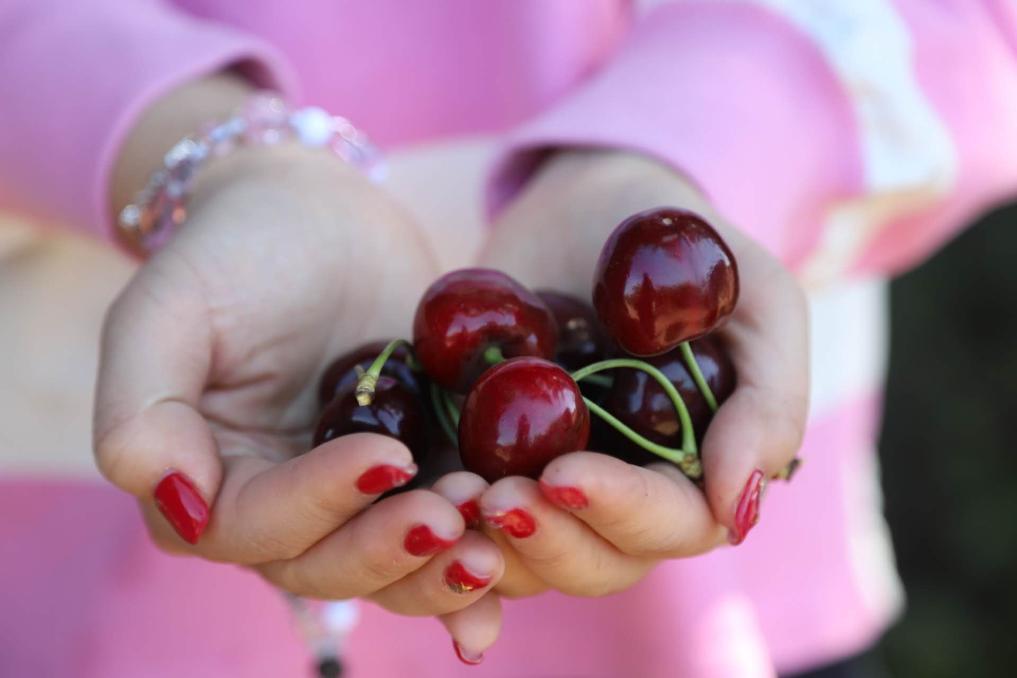
Claudia Soler, executive director of the Chilean Cherry Committee of Frutas de Chile, described the relationship as both economic and cultural. China, she said, is the market that enabled the industry's expansion. The cherry's red color and rounded shape, she added, closely align with Chinese cultural symbolism, especially around the Lunar New Year, when cherries became a popular gift symbolizing happiness and success.
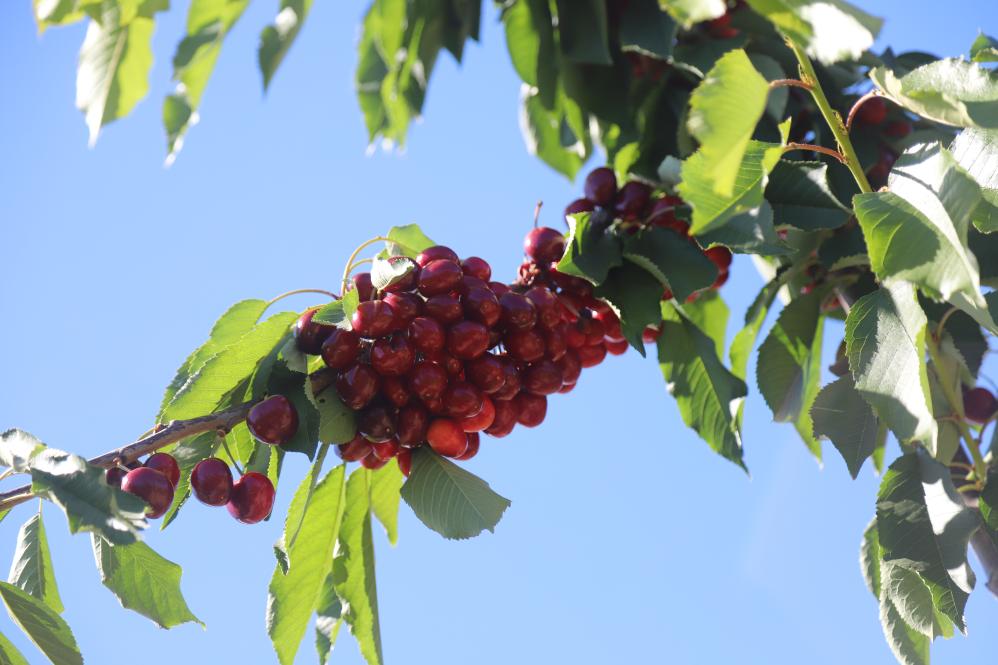
The decisive variable, however, came at sea. Soler noted that, to ensure a steady flow of cherries into China, Chile has invested heavily in strengthening its direct maritime shipping capacity in recent years.
Since 2018, Chile has operated a direct shipping route to China known as the "cherry express," cutting transit time from roughly 30 days to about 23 days. By the end of 2025, this dedicated shipping corridor had been further scaled up, doubling the number of direct sailings compared with the previous year. This allows cherries to arrive in China in greater volumes during the peak harvest season.
Faster, more reliable sea transport has reduced reliance on air freight, once essential to beating the holiday deadline. A Chengdu industry insider involved in a port logistics organization said that in earlier years, the start of the season often depended on air freight to "race against time." This year, he said, was different: newly deployed fast ships could save nearly 10 days compared with previous years.
With shipping risk lowered, supply can be released gradually rather than all at once, dampening price spikes and smoothing market entry.
This shift has reshaped incentives at the production end. Data from the Office of Agrarian Studies and Policies at Chile's Ministry of Agriculture show that the cherry planting area has expanded roughly twentyfold since 2000, nearly doubling from about 38,392 hectares in 2019 to 70,686 hectares by 2024.
Industry participants attribute this rapid growth in part to the gradual formation of a logistics system geared toward the Chinese market, which has given Chilean growers clearer expectations over timing, allowing them to expand planting and plan output with greater confidence.
Processing hubs in Chile's central regions now operate on a different temporal logic. Time remains critical, but it is no longer singular. In the past, a delayed shipment could miss the Lunar New Year altogether, erasing margins and turning a strong harvest into a liability. Today, improved transport has allowed exporters to distribute shipments across the season, reducing the risk concentrated in any single sailing.
For exporters such as Garces Fruit, Chile's largest cherry exporter, China has become central to the industry's viability. "Without the Chinese market, there would be no Chilean cherry industry," said Hernan Garces, the company's export manager. The trade, he added, is a clear "win-win," supporting employment across harvesting, processing and logistics.
At peak season, Garces Fruit's three processing plants handle up to 2 million kilograms of cherries per day and employ around 6,000 workers. Across the industry, Chilean media, citing industry estimates, put the number of temporary jobs created during the two-month cherry season at 400,000 to 600,000, underscoring the economic weight of the cherry season.
What has changed, then, is not scale but timing. The cherry season remains intense, though less compressed.
For Chinese consumers, cherries are no longer limited to a short pre-holiday rush, easing the need for concentrated buying ahead of the Lunar New Year. Frutas de Chile estimates that in the 2025-2026 season, Chile will export about 110 million boxes of cherries (five kilograms per box, roughly 550,000 tonnes), with more than 90 percent destined for China.
For Chile, long associated with copper, cherries have emerged as a pillar of agricultural exports, supporting around 200,000 stable jobs. For China, the same supply chain has quietly reshaped consumption patterns. A fruit once governed by scarcity and ceremony is increasingly more available -- its value determined less by the calendar than by the efficiency with which two hemispheres now share the same clock. ■











Comments