欧美精品在线第一页,久久av影院,午夜视频在线播放一三,久久91精品久久久久久秒播,成人一区三区,久久综合狠狠综合久久狠狠色综合,成人av一区二区亚洲精,欧美a级在线观看
         
        News Analysis: Myriad factors responsible for high death toll in Japan's worst weather disaster in 36 years
                         Source: Xinhua | 2018-07-12 10:50:20 | Editor: huaxia

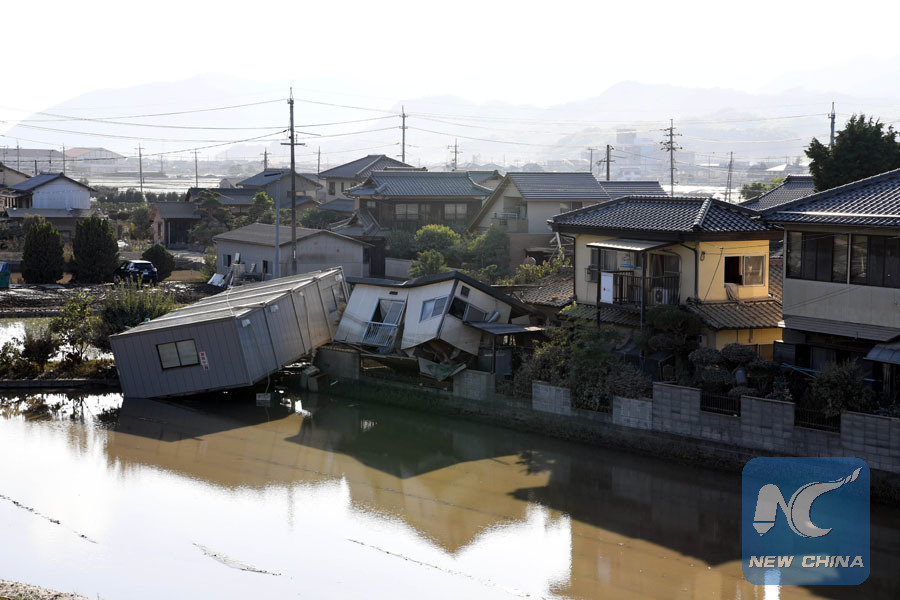
        Photo taken on July 10, 2018, shows submerged and destroyed houses in a flooded area in Kurashiki, Okayama Prefecture, Japan. (Xinhua/Ma Ping)

        TOKYO, July 11 (Xinhua) -- A number of meteorological, natural and social factors combined to make the perfect storm, which since last Thursday has killed at least 176 people and forced hundreds of thousands to flee from their homes in western Japan, experts said Wednesday.

        According to the Japan Meteorological Agency (JMA) who warned of torrential rain and issued evacuation advisories and warnings on July 5, the tail end of Typhoon Prapiroon saw atmospheric conditions from western to northern Japan become very unstable, just before the deluge.

        This was owing to warm and moist air flowing into a low pressure system and an active seasonal rainy front close to northern Japan.

        The weather agency gave fair warning of unprecedented amounts of rainfall expected across wide swathes of Japan and said that the record amounts of rain would cause landslides, flooding, lightning and tornadoes.

        Hence, questions have been asked about the government's preparedness and local municipalities' reaction times and protocols in the face of an impending weather-related disaster that would lead to so many lives being lost.

        According to some experts, the government here has lagged behind others in taking preventative measures in the face of an increasing number of torrential rainfalls each year.

        "The government is just starting to realize that it needs to take steps to mitigate the impact of global warming," Takashi Okuma, an emeritus professor at Niigata University who studies disasters, was quoted as saying on the matter.

        He added that, "Japan, one of the most seismically-active places in the world, has stressed earthquake preparedness and regulations to make buildings quake-proof, but it has done less about potential flood disasters."
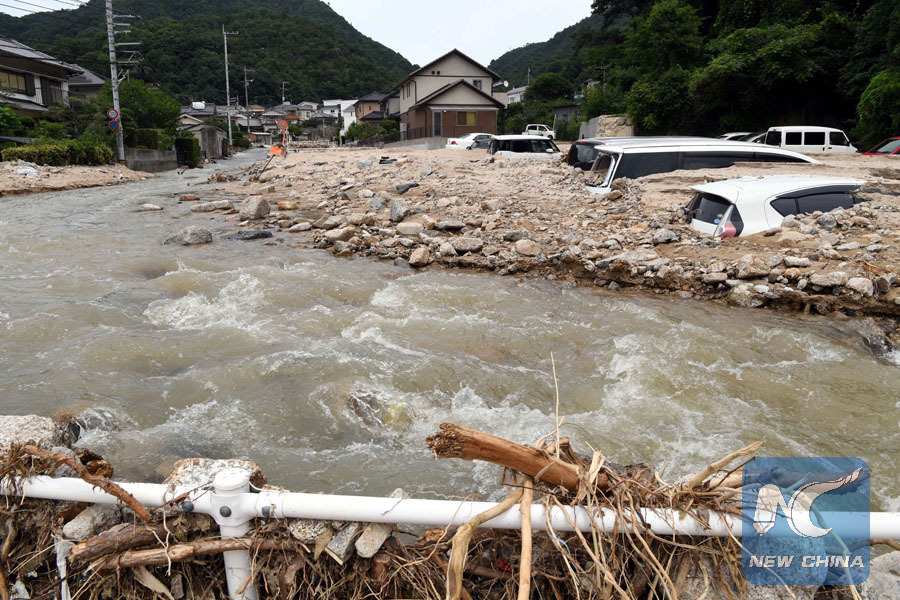
        Photo taken on July 11, 2018, shows floodwater flowing by a village in Kure, Hiroshima, southwestern Japan. (Xinhua/Ma Ping)

        On a municipal level, hazard maps highlighting potential flood zones and landslide spots were required to be created and publicized in Japan.

        In 2001, the maps were required to be distributed and by 2013, the majority of municipalities made the requisite information available to their residents.

        But owing to the fact that many of the homes built in potentially hazardous areas that were caught in the recent devastating downpours or hit by landslides were built prior to 2001, experts believe that following the evacuation orders, many residents did not know where to go to seek refuge.

        Kurashiki City, one of the hardest-hit regions in Okayama Prefecture, for example, did not receive its hazard map until 2016, and, compounding the lack of knowledge as to evacuation destinations, some experts have said that the orders to evacuate, in fact, came too late.

        This left hundreds of thousands of people in high-risk areas with nowhere to go, and even if they did, it would have already been too late.

        Other experts point out that in addition to the confusion as to where to go, others opted to just stay put and "ride it out", regardless of the warnings.

        Emi Masatani, an expert from Japan Bousaisikai, a non-profit disaster-prevention organization, told Xinhua, that the disproportionate number of fatalities may have been down to not enough attention being placed on predictable weather patterns.

        "People in Japan normally attach great importance to the prevention of natural disasters, but sometimes fail to pay enough attention to heavy rainfalls," Masatani said.
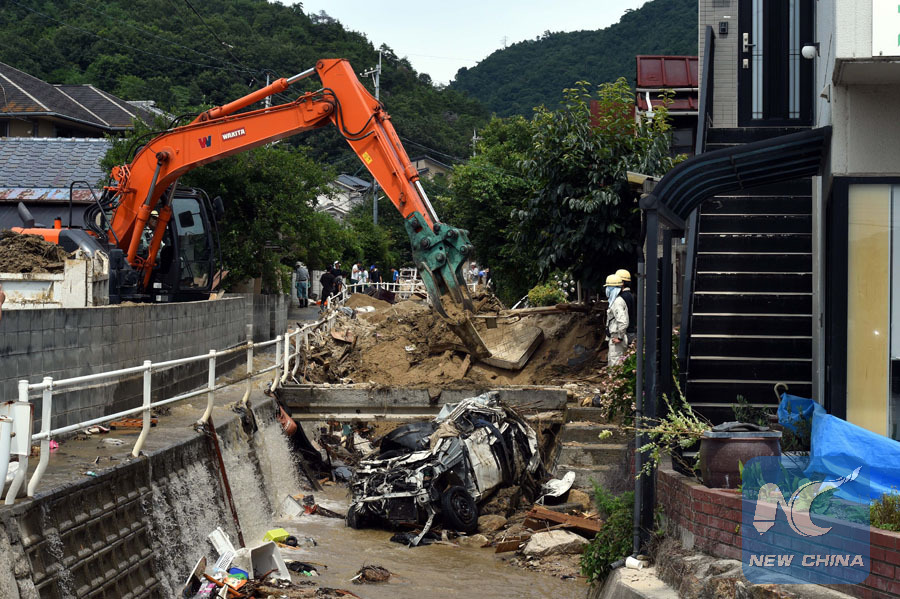
        Rescue workers clear mud and debris in Kure, Hiroshima, southwestern Japan, July 11, 2018. (Xinhua/Ma Ping)

        According to local reports, many people also chose to stay at home, even after the weather agency issued emergency warnings and evacuation orders following the heavy rain, "thus lost the chance to escape when the floods hit or landslides occurred," she added.

        She went on to say that there is a certain kind of mentality in Japan where people in potentially precarious situations involving natural disasters just believe they will be alright, as they have been in the past. "It's a kind of 'fluke' mentality," she said.

        But, oftentimes, by the time they realize the severity of the situation, it's too late, Masatani said.

        Also, potentially contributing to the high death toll is not just the number of landslides -- the land ministry said there were landslides at 448 locations in 29 of Japan's 47 prefectures as a result of the torrential rain -- but their contents.

        According to Kagoshima University Professor Takashi Jitosono, in Hiroshima and Okayama prefectures, the landslides were found to contain large, boulder-like rocks called corestones.

        In mountainous regions of Japan, rainwater seeps into the cracks of the granite and the rock begins to erode and crumbles into the soil.

        This process exposes the corestones, Jitosono said, which can be as large as 2 meters wide and weigh several tons, and, when the land shifts, these rocks are sent hurtling down the mountains and can significantly multiply the damage caused.

        Jitosono has called for more netting or barriers in such areas that have evidence of exposed corestones, to prevent them from falling down the mountains.

        In addition, post World War II reforestation policies saw numerous mountains logged for resources and replanted with trees that have roots with a far lower capacity to retain water.

        As with the corestones, when the trees' roots become inundated with water from the torrential rains, they are easily uprooted as the land shifts and also add to the danger level of landslides.

        Back to Top Close
        Xinhuanet

        News Analysis: Myriad factors responsible for high death toll in Japan's worst weather disaster in 36 years

        Source: Xinhua 2018-07-12 10:50:20

        Photo taken on July 10, 2018, shows submerged and destroyed houses in a flooded area in Kurashiki, Okayama Prefecture, Japan. (Xinhua/Ma Ping)

        TOKYO, July 11 (Xinhua) -- A number of meteorological, natural and social factors combined to make the perfect storm, which since last Thursday has killed at least 176 people and forced hundreds of thousands to flee from their homes in western Japan, experts said Wednesday.

        According to the Japan Meteorological Agency (JMA) who warned of torrential rain and issued evacuation advisories and warnings on July 5, the tail end of Typhoon Prapiroon saw atmospheric conditions from western to northern Japan become very unstable, just before the deluge.

        This was owing to warm and moist air flowing into a low pressure system and an active seasonal rainy front close to northern Japan.

        The weather agency gave fair warning of unprecedented amounts of rainfall expected across wide swathes of Japan and said that the record amounts of rain would cause landslides, flooding, lightning and tornadoes.

        Hence, questions have been asked about the government's preparedness and local municipalities' reaction times and protocols in the face of an impending weather-related disaster that would lead to so many lives being lost.

        According to some experts, the government here has lagged behind others in taking preventative measures in the face of an increasing number of torrential rainfalls each year.

        "The government is just starting to realize that it needs to take steps to mitigate the impact of global warming," Takashi Okuma, an emeritus professor at Niigata University who studies disasters, was quoted as saying on the matter.

        He added that, "Japan, one of the most seismically-active places in the world, has stressed earthquake preparedness and regulations to make buildings quake-proof, but it has done less about potential flood disasters."

        Photo taken on July 11, 2018, shows floodwater flowing by a village in Kure, Hiroshima, southwestern Japan. (Xinhua/Ma Ping)

        On a municipal level, hazard maps highlighting potential flood zones and landslide spots were required to be created and publicized in Japan.

        In 2001, the maps were required to be distributed and by 2013, the majority of municipalities made the requisite information available to their residents.

        But owing to the fact that many of the homes built in potentially hazardous areas that were caught in the recent devastating downpours or hit by landslides were built prior to 2001, experts believe that following the evacuation orders, many residents did not know where to go to seek refuge.

        Kurashiki City, one of the hardest-hit regions in Okayama Prefecture, for example, did not receive its hazard map until 2016, and, compounding the lack of knowledge as to evacuation destinations, some experts have said that the orders to evacuate, in fact, came too late.

        This left hundreds of thousands of people in high-risk areas with nowhere to go, and even if they did, it would have already been too late.

        Other experts point out that in addition to the confusion as to where to go, others opted to just stay put and "ride it out", regardless of the warnings.

        Emi Masatani, an expert from Japan Bousaisikai, a non-profit disaster-prevention organization, told Xinhua, that the disproportionate number of fatalities may have been down to not enough attention being placed on predictable weather patterns.

        "People in Japan normally attach great importance to the prevention of natural disasters, but sometimes fail to pay enough attention to heavy rainfalls," Masatani said.

        Rescue workers clear mud and debris in Kure, Hiroshima, southwestern Japan, July 11, 2018. (Xinhua/Ma Ping)

        According to local reports, many people also chose to stay at home, even after the weather agency issued emergency warnings and evacuation orders following the heavy rain, "thus lost the chance to escape when the floods hit or landslides occurred," she added.

        She went on to say that there is a certain kind of mentality in Japan where people in potentially precarious situations involving natural disasters just believe they will be alright, as they have been in the past. "It's a kind of 'fluke' mentality," she said.

        But, oftentimes, by the time they realize the severity of the situation, it's too late, Masatani said.

        Also, potentially contributing to the high death toll is not just the number of landslides -- the land ministry said there were landslides at 448 locations in 29 of Japan's 47 prefectures as a result of the torrential rain -- but their contents.

        According to Kagoshima University Professor Takashi Jitosono, in Hiroshima and Okayama prefectures, the landslides were found to contain large, boulder-like rocks called corestones.

        In mountainous regions of Japan, rainwater seeps into the cracks of the granite and the rock begins to erode and crumbles into the soil.

        This process exposes the corestones, Jitosono said, which can be as large as 2 meters wide and weigh several tons, and, when the land shifts, these rocks are sent hurtling down the mountains and can significantly multiply the damage caused.

        Jitosono has called for more netting or barriers in such areas that have evidence of exposed corestones, to prevent them from falling down the mountains.

        In addition, post World War II reforestation policies saw numerous mountains logged for resources and replanted with trees that have roots with a far lower capacity to retain water.

        As with the corestones, when the trees' roots become inundated with water from the torrential rains, they are easily uprooted as the land shifts and also add to the danger level of landslides.

        010020070750000000000000011100001373189741
        主站蜘蛛池模板: 国产精品久久久久久一区二区三区 | 中文字幕欧美另类精品亚洲| 日本少妇一区二区三区| 亚洲国产aⅴ精品一区二区16| 少妇高潮大叫喷水| 国产三级国产精品国产专区50| 欧美在线观看视频一区二区| 欧美激情片一区二区| 日本福利一区二区| 欧美一区二区三区久久久久久桃花 | 国产精品一区二区三区在线看| 久久96国产精品久久99软件| 91国内精品白嫩初高生| 久久精品一| 国产精品一区二区人人爽| 国产丝袜在线精品丝袜91| 日韩精品中文字幕久久臀| 久久久久国产精品www| 夜夜夜夜曰天天天天拍国产| 欧美日韩精品不卡一区二区三区 | 午夜免费一级片| 国产欧美精品久久| 欧美日韩国产专区| 99精品区| 国产色午夜婷婷一区二区三区 | 日韩中文字幕在线一区二区| 国产欧美一区二区三区视频| 欧美日韩国产综合另类| 69xx国产| 在线亚洲精品| 香蕉av一区二区三区| 国产专区一区二区| 久久九九亚洲| 亚洲乱小说| 欧美一区二区三区日本| 亚洲精品少妇一区二区| 亚洲午夜国产一区99re久久| 亚洲精品欧美精品日韩精品| 欧洲激情一区二区| 中文字幕制服狠久久日韩二区 | 91久久香蕉| 日韩午夜毛片| 狠狠色噜噜狠狠狠狠2021免费 | 久久久久久久亚洲视频| 日本一区二区欧美| 国产视频一区二区在线| 国产一区激情| 国产午夜精品一区理论片飘花| 亚洲少妇中文字幕| 国产精品高潮在线| 国产在线干| 视频二区一区国产精品天天| 国产精华一区二区精华| 精品99免费视频| 国产精品美乳在线观看| 欧美高清性xxxx| 中文字幕欧美一区二区三区| 国产suv精品一区二区4| 狠狠色噜噜狠狠狠狠2021免费| 久久久综合亚洲91久久98| 精品国产乱码久久久久久影片| 国产在线一区观看| 国产一区二区国产| 国产91麻豆视频| 精品久久久影院| 国产人澡人澡澡澡人碰视| 欧美在线一区二区视频| 中文字幕av一区二区三区四区| 欧美日韩一级在线观看| 国产精品日韩在线观看| 免费看性生活片| 亚洲精品乱码久久久久久国产主播| 欧美一区二区三区爽大粗免费| 国产精品18久久久久久白浆动漫| 国产一区二区电影| 亚洲精品久久久久中文字幕欢迎你 | 国产精品午夜一区二区三区视频| 一区二区三区欧美精品| 毛片免费看看| 日本激情视频一区二区三区| 国产女人和拘做受视频免费| 伊人精品一区二区三区| 久久国产精品-国产精品| 久久99亚洲精品久久99果| 欧美日韩三区二区| 午夜裸体性播放免费观看| 亚欧精品在线观看| 一区二区91| 日本高清二区| 午夜激情电影在线播放| 国产精品久久久不卡| 91偷拍网站| 中文字幕一区二区三区四| 欧美激情午夜| 狠狠色狠狠色综合日日2019| 国产一区二区资源| 99久国产| 亚洲一区2区三区| 欧美日韩一级二级三级| 91麻豆精品国产自产欧美一级在线观看| 在线精品国产一区二区三区88 | 国产不卡一区在线| 激情久久久久久| 欧美一区二区三区激情在线视频| 国产婷婷色一区二区三区在线| 午夜大片网| 午夜激情看片| 国产高潮国产高潮久久久91| 麻豆9在线观看免费高清1| 17c国产精品一区二区 | 日本护士hd高潮护士| 国产一级片自拍| 99re久久精品国产| xxxx18hd护士hd护士| 国产精品人人爽人人做av片| 久久99亚洲精品久久99| 性色av香蕉一区二区| 精品国产二区三区| 日韩午夜电影在线| 一级女性全黄久久生活片免费| 日韩国产精品久久久久久亚洲| 91精品福利在线| 日本一区二区三区电影免费观看| 97人人澡人人爽人人模亚洲| 亚洲高清久久久| 偷拍久久精品视频| 亚洲欧美一区二区三区三高潮| 国产高清一区二区在线观看| 午夜社区在线观看| 日韩电影在线一区二区三区| 午夜无遮挡| 日本白嫩的18sex少妇hd| 999偷拍精品视频| 中文字幕一级二级三级| 国产91视频一区| 色一情一交一乱一区二区三区| 精品国产一区二区三区四区四| 国产乱色国产精品播放视频| 欧美午夜理伦三级在线观看偷窥| 国产乱对白刺激视频在线观看| 国产88av| 久久99久久99精品免观看软件| 国产乱了高清露脸对白| 国产88在线观看入口| 波多野结衣女教师30分钟| 亚洲乱子伦| 香蕉av一区二区| 一本色道久久综合亚洲精品浪潮| 少妇av一区二区三区| 欧美一区久久| 91免费看国产| 大bbw大bbw巨大bbb| 91精品国产麻豆国产自产在线| 九一国产精品| 欧美亚洲精品suv一区| 国产99视频精品免视看芒果| 99久久婷婷国产综合精品草原| 91精品久久久久久| 久久综合久久自在自线精品自| 丰满少妇在线播放bd日韩电影| 亚洲乱码一区二区三区三上悠亚 | 精品videossexfreeohdbbw| 6080日韩午夜伦伦午夜伦| 国产午夜精品免费一区二区三区视频| 国产韩国精品一区二区三区| 国产精品麻豆一区二区| 扒丝袜pisiwa久久久久| 日韩午夜毛片| 国产亚洲久久| 麻豆视频免费播放| 久久夜色精品久久噜噜亚| 精品国产一区二区三区高潮视 | 中文字幕欧美日韩一区| 久久久中精品2020中文| 高清国产一区二区三区| 欧美日韩国产一二| 久久99国产综合精品| 在线精品国产一区二区三区 | 中文av一区| 国产精品丝袜综合区另类| 日韩av在线影视| 精品福利一区二区| 国产精品1区二区| 久久99久久99精品免观看软件| 久久久999精品视频| 欧美高清一二三区| 亚洲欧美日韩三区| 91麻豆精品国产91久久久更新资源速度超快 | 久久婷婷国产综合一区二区| 国产精品日韩一区二区| 亚洲网久久| 一本色道久久综合亚洲精品浪潮| 久久久久久国产精品免费| 88888888国产一区二区| 国产91九色在线播放| 日韩av电影手机在线观看| 亚洲国产精品一区二区久久hs| 国产理论一区二区三区| 午夜情所理论片| 日本免费电影一区二区| 在线中文字幕一区| 手机看片国产一区| 狠狠色丁香久久综合频道| 国产麻豆一区二区| 欧美日韩国产色综合视频| 一区二区中文字幕在线观看| 91在线一区| 午夜影院你懂的| 日韩中文字幕亚洲欧美| xxxxhd欧美| 欧美精品久| 亚洲少妇一区二区| 国产伦精品一区二区三区无广告| 亚洲高清国产精品| 久久久精品久久日韩一区综合| 久爱精品视频在线播放| 欧美日韩久久一区| 欧美日韩一区免费| 欧美激情视频一区二区三区| 亚洲精品国产久| 久爱视频精品| 岛国精品一区二区| 九九久久国产精品| 99久久国产综合精品尤物酒店| 李采潭无删减版大尺度| 91av精品| 91亚洲欧美强伦三区麻豆| 国产精品久久久久四虎| 国产特级淫片免费看| 欧美一区二区三区不卡视频| 国产88av| 国产精品国产亚洲精品看不卡15| 国产理论片午午午伦夜理片2021| 欧美精品一级二级| 久久96国产精品久久99软件| 国产一区免费在线| 午夜av片| 国产jizz18女人高潮| 国产91在线播放| 亚洲精品一区二区另类图片| 国产日韩欧美亚洲| 日本精品一区二区三区视频| 99精品视频一区二区| 99久久夜色精品国产网站| 国产日韩欧美在线影视| 亚洲国产aⅴ精品一区二区16|