欧美精品在线第一页,久久av影院,午夜视频在线播放一三,久久91精品久久久久久秒播,成人一区三区,久久综合狠狠综合久久狠狠色综合,成人av一区二区亚洲精,欧美a级在线观看
        Xinhuanet

        Full text: Chinese Outcome List of the Meeting Between the Chinese and U.S. Presidents in Hangzhou

        Source: Xinhua 2016-09-04 18:16:05

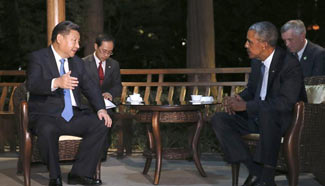
        HANGZHOU, Sept. 4 (Xinhua) -- Chinese President Xi Jinping met with U.S. President Barack Obama on Saturday ahead of the Group of 20 (G20) summit in China's eastern city of Hangzhou. Following is the full text of an outcome list of the meeting from the Chinese side.

        Chinese Outcome List of the Meeting Between the Chinese and U.S. Presidents in Hangzhou

        On September 3, 2016, President Xi Jinping of the People's Republic of China held meetings with President Barack Obama of the United States of America during the G20 Hangzhou Summit. The two sides had in-depth, candid and constructive talks on China-U.S. relations and major regional and global issues of common interest, and reached a wide range of important consensus. According to the Chinese foreign ministry officials, the consensus and outcomes reached by the two sides are as follows:

        1. The New Model of Major-country Relationship Between China and the United States: The two sides commended the important progress made in the building of a new model of major-country relationship between China and the United States since the meeting between the two heads of state in Sunnylands in June 2013, and agreed to continue the joint endeavor to move forward this relationship in accordance with the consensus reached by the two presidents. The two sides will maintain close high-level communication and institutionalized dialogues, continue to enhance strategic mutual trust, deepen coordination and cooperation at bilateral, regional and global levels, manage differences and sensitive issues in a constructive manner, and promote the sustained, sound and steady development of China-U.S. relations.

        2. China and the United States recognize that the two economies are closely interconnected and each country has a strong stake in the economic prosperity of the other. Policies that lay the foundation for strong and sustainable growth in both economies are essential to improving the livelihoods of Chinese and American citizens, as well as countless others around the world. To this end:

        -- China and the United States commit to use all policy tools - monetary, fiscal and structural - to foster confidence and strengthen growth. Monetary policy will continue to support economic activity and ensure price stability, consistent with central banks' mandates, but monetary policy alone cannot lead to balanced growth. Fiscal policy should be used flexibly to strengthen growth, job creation and household demand, and can complement and support the implementation of structural reforms.P -- China and the United States jointly reaffirm their G20 exchange rate commitments, including that they will refrain from competitive devaluations and not target exchange rates for competitive purposes. China will continue an orderly transition to a market-determined exchange rate, enhancing two-way flexibility. China stresses that there is no basis for a sustained depreciation of the RMB. Both sides recognize the importance of clear policy communication.

        -- The United States welcomes the commitments China has made on economic reform, especially on supply-side structural reform, and progress achieved so far, including efforts to strengthen the fundamental role of domestic consumption in driving China's economic growth. China commits to steadfastly advance supply-side structural reform, concentrating on cutting excess capacity, reducing inventory, deleveraging, lowering costs, and enhancing support for addressing weaknesses in economic and social development, to support China's transition to a more sustainable growth path. China commits to balance stable economic growth and structural adjustment, and expand domestic demand by increasing household consumption, increasing the service sector's proportion of the economy and ensuring investment is high quality and driven by the private sector. China will continue to simplify administrative procedures and transform government functions, press ahead with financial sector reforms to further enable the market to play a decisive role in credit allocation, open further the services sector to competition, and strengthen the social safety net.

        -- The United States remains committed to promoting strong, sustainable and more balanced growth characterized by higher domestic investment, in particular infrastructure investment, and national savings. At the same time, the Administration continues to prioritize policies geared toward expanding access to education, reforming the immigration system, and improving the labor force participation rate and productivity.

        -- China's fiscal policy has played a role in expanding domestic demand and supporting structural reform. Measures have included lowering taxes and fees, establishing a special fund to provide support for laid-off workers, reducing social security contributions of employers in a phased approach, strengthening the management of local government debt to address risks, and addressing shortcomings in economic and social development, including poverty reduction and ecological protection. Going forward, China commits to use proactive fiscal policy to promote structural reforms and expand demand as appropriate.

        -- The United States recognizes the importance of predictability in the budget process and the impact budget uncertainty can have on the United States and global economies, and is committed to putting U.S. government finances on a sustainable path over the medium term.

        -- China recognizes that one of the goals of supply-side structural reform is corporate deleveraging, including managing the corresponding challenges for the banking sector. Building on current progress, China is to deepen supply-side structural reforms with a comprehensive strategy, including state-owned enterprise (SOE) reform, giving full play to the role of the market and legal mechanisms, to reduce corporate debt, including SOE debt.

        -- Acknowledging the sizable impact these reforms will have on China and ultimately on global growth, China reaffirms its commitment to further improve the transparency of economic and financial policies as well as the availability of data on economic activity to better inform regulators, policymakers, firms, and investors worldwide.

        3. China and the United States recognize that structural problems, including excess capacity in some industries, exacerbated by a weak global economic recovery and depressed market demand, have caused a negative impact on trade and workers. Both countries recognize that excess capacity in steel and other industries is a global issue which requires collective responses. Both sides recognize that subsidies and other types of support from governments or government-sponsored institutions can cause market distortions and contribute to global excess capacity and therefore require attention. The two sides commit to enhance communication and cooperation, and are committed to take effective steps to address the challenges so as to enhance market function and encourage adjustments. In this regard, China and the United States welcome the potential establishment of a Global Forum, with active participation of G20 members and interested OECD members, as a cooperative platform for dialogue and information-sharing on global capacity developments and on policies and support measures taken by governments, to be facilitated by the OECD Secretariat.

        The United States welcomes China's supply-side structural reform program, which has cutting excess capacity as one of its key objectives. China and the United States recognize that due to a weak global economic recovery and depressed market demand, the excess capacity of the electrolytic aluminum industry has increased and become a global issue requiring collective response. Both countries are to work together to address the global electrolytic aluminum excess capacity.

        China and the United States recognize the importance of the establishment and improvement of impartial bankruptcy systems and mechanisms. China attaches great importance to resolving excess capacity through the systems and mechanisms relating to mergers and acquisitions; restructuring; and bankruptcy reorganization, bankruptcy settlement, and bankruptcy liquidation, according to its laws. In the process of addressing excess capacity, China is to implement bankruptcy laws by continuing to establish special bankruptcy tribunals, further improving the bankruptcy administrator systems and using modern information tools. China and the United States commit to, starting as early as 2016, conduct regular and ad hoc communication and exchanges regarding the implementation of our respective bankruptcy laws through forums or mutual visits.


           1 2 3 4 5 6 >>  

         
        Full text: Chinese Outcome List of the Meeting Between the Chinese and U.S. Presidents in Hangzhou
                         Source: Xinhua | 2016-09-04 18:16:05 | Editor: ying

        HANGZHOU, Sept. 4 (Xinhua) -- Chinese President Xi Jinping met with U.S. President Barack Obama on Saturday ahead of the Group of 20 (G20) summit in China's eastern city of Hangzhou. Following is the full text of an outcome list of the meeting from the Chinese side.

        Chinese Outcome List of the Meeting Between the Chinese and U.S. Presidents in Hangzhou

        On September 3, 2016, President Xi Jinping of the People's Republic of China held meetings with President Barack Obama of the United States of America during the G20 Hangzhou Summit. The two sides had in-depth, candid and constructive talks on China-U.S. relations and major regional and global issues of common interest, and reached a wide range of important consensus. According to the Chinese foreign ministry officials, the consensus and outcomes reached by the two sides are as follows:

        1. The New Model of Major-country Relationship Between China and the United States: The two sides commended the important progress made in the building of a new model of major-country relationship between China and the United States since the meeting between the two heads of state in Sunnylands in June 2013, and agreed to continue the joint endeavor to move forward this relationship in accordance with the consensus reached by the two presidents. The two sides will maintain close high-level communication and institutionalized dialogues, continue to enhance strategic mutual trust, deepen coordination and cooperation at bilateral, regional and global levels, manage differences and sensitive issues in a constructive manner, and promote the sustained, sound and steady development of China-U.S. relations.

        2. China and the United States recognize that the two economies are closely interconnected and each country has a strong stake in the economic prosperity of the other. Policies that lay the foundation for strong and sustainable growth in both economies are essential to improving the livelihoods of Chinese and American citizens, as well as countless others around the world. To this end:

        -- China and the United States commit to use all policy tools - monetary, fiscal and structural - to foster confidence and strengthen growth. Monetary policy will continue to support economic activity and ensure price stability, consistent with central banks' mandates, but monetary policy alone cannot lead to balanced growth. Fiscal policy should be used flexibly to strengthen growth, job creation and household demand, and can complement and support the implementation of structural reforms.P -- China and the United States jointly reaffirm their G20 exchange rate commitments, including that they will refrain from competitive devaluations and not target exchange rates for competitive purposes. China will continue an orderly transition to a market-determined exchange rate, enhancing two-way flexibility. China stresses that there is no basis for a sustained depreciation of the RMB. Both sides recognize the importance of clear policy communication.

        -- The United States welcomes the commitments China has made on economic reform, especially on supply-side structural reform, and progress achieved so far, including efforts to strengthen the fundamental role of domestic consumption in driving China's economic growth. China commits to steadfastly advance supply-side structural reform, concentrating on cutting excess capacity, reducing inventory, deleveraging, lowering costs, and enhancing support for addressing weaknesses in economic and social development, to support China's transition to a more sustainable growth path. China commits to balance stable economic growth and structural adjustment, and expand domestic demand by increasing household consumption, increasing the service sector's proportion of the economy and ensuring investment is high quality and driven by the private sector. China will continue to simplify administrative procedures and transform government functions, press ahead with financial sector reforms to further enable the market to play a decisive role in credit allocation, open further the services sector to competition, and strengthen the social safety net.

        -- The United States remains committed to promoting strong, sustainable and more balanced growth characterized by higher domestic investment, in particular infrastructure investment, and national savings. At the same time, the Administration continues to prioritize policies geared toward expanding access to education, reforming the immigration system, and improving the labor force participation rate and productivity.

        -- China's fiscal policy has played a role in expanding domestic demand and supporting structural reform. Measures have included lowering taxes and fees, establishing a special fund to provide support for laid-off workers, reducing social security contributions of employers in a phased approach, strengthening the management of local government debt to address risks, and addressing shortcomings in economic and social development, including poverty reduction and ecological protection. Going forward, China commits to use proactive fiscal policy to promote structural reforms and expand demand as appropriate.

        -- The United States recognizes the importance of predictability in the budget process and the impact budget uncertainty can have on the United States and global economies, and is committed to putting U.S. government finances on a sustainable path over the medium term.

        -- China recognizes that one of the goals of supply-side structural reform is corporate deleveraging, including managing the corresponding challenges for the banking sector. Building on current progress, China is to deepen supply-side structural reforms with a comprehensive strategy, including state-owned enterprise (SOE) reform, giving full play to the role of the market and legal mechanisms, to reduce corporate debt, including SOE debt.

        -- Acknowledging the sizable impact these reforms will have on China and ultimately on global growth, China reaffirms its commitment to further improve the transparency of economic and financial policies as well as the availability of data on economic activity to better inform regulators, policymakers, firms, and investors worldwide.

        3. China and the United States recognize that structural problems, including excess capacity in some industries, exacerbated by a weak global economic recovery and depressed market demand, have caused a negative impact on trade and workers. Both countries recognize that excess capacity in steel and other industries is a global issue which requires collective responses. Both sides recognize that subsidies and other types of support from governments or government-sponsored institutions can cause market distortions and contribute to global excess capacity and therefore require attention. The two sides commit to enhance communication and cooperation, and are committed to take effective steps to address the challenges so as to enhance market function and encourage adjustments. In this regard, China and the United States welcome the potential establishment of a Global Forum, with active participation of G20 members and interested OECD members, as a cooperative platform for dialogue and information-sharing on global capacity developments and on policies and support measures taken by governments, to be facilitated by the OECD Secretariat.

        The United States welcomes China's supply-side structural reform program, which has cutting excess capacity as one of its key objectives. China and the United States recognize that due to a weak global economic recovery and depressed market demand, the excess capacity of the electrolytic aluminum industry has increased and become a global issue requiring collective response. Both countries are to work together to address the global electrolytic aluminum excess capacity.

        China and the United States recognize the importance of the establishment and improvement of impartial bankruptcy systems and mechanisms. China attaches great importance to resolving excess capacity through the systems and mechanisms relating to mergers and acquisitions; restructuring; and bankruptcy reorganization, bankruptcy settlement, and bankruptcy liquidation, according to its laws. In the process of addressing excess capacity, China is to implement bankruptcy laws by continuing to establish special bankruptcy tribunals, further improving the bankruptcy administrator systems and using modern information tools. China and the United States commit to, starting as early as 2016, conduct regular and ad hoc communication and exchanges regarding the implementation of our respective bankruptcy laws through forums or mutual visits.

           1 2 3 4 5 6   

        分享
        ?
        Chinese, Egyptian presidents meet ahead of G20 summit
        ?
        Russian president arrives in China for G20 summit
        ?
        G20 to help boost global trade, investment: MOC official
        ?
        Xi meets Obama ahead of G20 summit
        Daily life in Hangzhou
        Daily life in Hangzhou
        11th G20 summit kicks off in Hangzhou
        11th G20 summit kicks off in Hangzhou
        B20 summit concludes in Hangzhou
        B20 summit concludes in Hangzhou
        President Xi meets with Obama
        President Xi meets with Obama
        Egypt reopens Rafah crossing border with Gaza Strip for 2 days
        Egypt reopens Rafah crossing border with Gaza Strip for 2 days
        Weekly Xinhua photos (Aug 29 - Sept 4)
        Weekly Xinhua photos (Aug 29 - Sept 4)
        Kite festival kicks off in Colombo, Sri Lanka
        Kite festival kicks off in Colombo, Sri Lanka
        2016 Canadian International Air Show held in Toronto
        2016 Canadian International Air Show held in Toronto
        Back to Top Close
        010020070750000000000000011100001356601751
        主站蜘蛛池模板: 久久久久一区二区三区四区| 强制中出し~大桥未久10在线播放| 久久久综合香蕉尹人综合网| 99国产超薄丝袜足j在线观看| 欧美3级在线| 国产午夜精品一区二区三区最新电影 | 欧美一区二区三区爽大粗免费| 精品视频久| 精品999久久久| 中文字幕欧美一区二区三区| 少妇高清精品毛片在线视频| 国产乱码精品一区二区三区介绍| 麻豆精品国产入口| 日韩欧美中文字幕一区| 国产午夜精品一区二区三区四区 | 大bbw大bbw巨大bbw看看| 亚洲第一天堂无码专区| 狠狠色噜噜狼狼狼色综合久| 国产乱xxxxx国语对白| 国产在线视频二区| xxxxx色| 97视频久久久| 国产午夜亚洲精品羞羞网站| 久久91精品国产91久久久| 999国产精品999久久久久久| 国产性生交xxxxx免费| 亚洲国产精品美女| 99热久久精品免费精品| 国产麻豆精品久久| 国产一区欧美一区| 野花国产精品入口| 精品福利一区| 国产69精品久久久久app下载| 国产精品一二三区免费| 国产一级片大全| 国产综合久久精品| 狠狠色狠狠色综合日日2019| 欧美日韩中文字幕一区| 久久99国产综合精品| 乱淫免费视频| 好吊妞国产欧美日韩软件大全| 一区二区三区四区视频在线| 日韩欧美激情| 欧美一区二区三区久久综合| 国产97在线播放| 午夜一二区| 好吊妞国产欧美日韩软件大全| 国产精品亚洲第一区| 国产99久久久精品视频| 国产www亚洲а∨天堂| 国产精品天堂| 欧美日韩一区二区三区四区五区| 国产精品一区二区中文字幕| 欧美一区二区三区免费看| 国产伦精品一区二区三区免费迷| 欧美日韩一区二区三区不卡| 欧美日韩国产一二| 国产一区二区三区大片| 国产欧美一区二区三区在线| 满春阁精品av在线导航| 玖玖国产精品视频| 久久久久国产精品www| 欧美日韩国产在线一区| 欧美一区二区三区性| 少妇久久精品一区二区夜夜嗨| 午夜诱惑影院| 国产精欧美一区二区三区久久| 一色桃子av大全在线播放| xxxxhdvideosex| av午夜在线| 狠狠色噜噜狠狠狠狠88| 中文在线一区| 在线观看欧美日韩国产| 色综合欧美亚洲国产| 日韩av中文字幕在线| 欧美日韩亚洲国产一区| 视频一区二区三区中文字幕| 国产精品亚洲一区| 欧美大成色www永久网站婷| 午夜看片在线| 欧美激情精品一区| 国产88av| 国产69精品久久| 国产一区二区播放| 毛片大全免费看| 在线精品视频一区| 亚洲五码在线| 日本一二区视频| 91亚洲欧美强伦三区麻豆| 亚洲午夜国产一区99re久久| av午夜剧场| 国产精品一二三区免费| 一级午夜影院| 大bbw大bbw巨大bbw看看| 国产第一区二区| 97人人模人人爽人人喊小说| 国产一二区精品| 91超碰caoporm国产香蕉| 日韩av在线免费电影| 国产精品高潮在线| 精品国产乱码久久久久久久久| 国产日韩欧美中文字幕| 午夜理伦影院| 欧美乱妇高清无乱码一级特黄| 国产精品亚洲一区| 精品国产区| 欧美一区二区三区免费视频| 日本福利一区二区| 国产91电影在线观看| 久久午夜鲁丝片| 欧美精品第一区| 99久久www免费| 国产在线一区不卡| 国产精品69久久久| 欧美色综合天天久久| 国产欧美日韩在线观看| 国产91一区| 国产区91| 国产极品美女高潮无套久久久| 国产一区二区三区影院| 四季av中文字幕一区| 国产精品亚洲第一区| 欧美人妖一区二区三区| 久久久久久国产一区二区三区| 国产不卡一二三区| 欧美xxxxhdvideos| 亚洲精品卡一| 久久精品国产一区二区三区| 日韩精品一区中文字幕| 91福利视频免费观看| 久久99中文字幕| 九一国产精品| 中文字幕a一二三在线| 国产精品无码永久免费888| 国产一级大片| 激情久久综合网| 2021天天干夜夜爽| 欧美一区视频观看| 欧洲精品一区二区三区久久| 国产91精品高清一区二区三区| 国产一区亚洲一区| 69精品久久| 日本免费电影一区二区| 亚洲欧美日韩精品在线观看| 91久久免费| 黄色av免费| 好吊妞国产欧美日韩软件大全| 狠狠色依依成人婷婷九月| 午夜影院试看五分钟| 挺进警察美妇后菊| 国产精品视频一区二区二| 国产精品一区二区日韩新区| 日韩亚洲精品在线观看| 久久久久久亚洲精品| 久久久久久国产精品免费| 国产日韩欧美网站| 国产一区第一页| 欧美精品久| 国产欧美一区二区三区免费| 精品国产区| 国产麻豆91欧美一区二区| 国产日韩欧美自拍| 国产一区二区视频免费观看| 国产一级片网站| 亚洲午夜精品一区二区三区电影院| 亚洲精品少妇久久久久| 国产在线视频99| 国产精品亚洲а∨天堂123bt| 国产精品综合在线| 久久人做人爽一区二区三区小说| 日本一区二区免费电影| 欧美日韩一区二区三区四区五区| 国产1区2| 欧美一区二三区人人喊爽| 国产男女乱淫真高清视频免费| 99精品偷拍视频一区二区三区| 91波多野结衣| 狠狠躁狠狠躁视频专区| 综合欧美一区二区三区| 91嫩草入口| 亚洲少妇一区二区| 亚洲伊人久久影院| 国产黄一区二区毛片免下载| 日韩av中文字幕在线免费观看| 亚洲午夜天堂吃瓜在线| 97人人揉人人捏人人添| 日本一区二区三区电影免费观看| 国产精品99一区二区三区| 欧美一级久久精品| 久久久一二区| 日韩精品免费一区二区在线观看| 精品国产一区二区三区忘忧草| 狠狠插影院| 97午夜视频| 国产一级片子| 国产欧美一二三区| 国产伦精品一区二区三区免费迷| 91亚洲国产在人线播放午夜| 久久一区二| 亚洲少妇一区二区| 热re99久久精品国99热蜜月| 99久久精品免费看国产交换| 国产床戏无遮挡免费观看网站| 国产的欧美一区二区三区 | 夜色av网| 午夜wwwww| 亚洲网站久久| 亚洲午夜国产一区99re久久| 一区二区三区欧美日韩| 大bbw大bbw巨大bbw看看| 性色av香蕉一区二区| 欧美一区二区三区高清视频| 日本边做饭边被躁bd在线看| 久久91久久久久麻豆精品| 久久精品国产色蜜蜜麻豆| 午夜电影网一区| 色噜噜日韩精品欧美一区二区| 一区二区久久久久| 午夜社区在线观看| 国产69精品久久久久男男系列| 国产精品久久久久久久久久久久久久久久久久 | 91精品第一页| 综合在线一区| 亚洲四区在线| 国产一区免费在线观看| 欧美激情在线一区二区三区| 日韩欧美中文字幕一区| 热99re久久免费视精品频软件| 国产999久久久| 自偷自拍亚洲| 国产精品视频久久| 国产精品自产拍在线观看蜜| 日韩a一级欧美一级在线播放| 欧美一区二区三区免费在线观看| 国产一二三区免费| 综合久久国产九一剧情麻豆| 国产精品麻豆一区二区| 羞羞免费视频网站| 国产精品久久国产精品99 | 精品午夜电影| 中文字幕一区二区三区免费| 国产99网站| 国产精品视频一区二区在线观看 | 国产精品18久久久久久白浆动漫| 国产1区2区视频| 少妇av一区二区三区|